Table of Contents
ToggleA master cleaning schedule isn’t just a list, it’s a roadmap that keeps your home in order without burning you out. Homeowners who track their cleaning tasks consistently spend less time scrambling before guests arrive and more time actually enjoying their spaces. Whether you’re managing a household solo or coordinating with family members, a well-organized master cleaning schedule tells you exactly what needs cleaning, when it should happen, and who’s responsible. This approach transforms cleaning from a chaotic reactive scramble into a predictable, manageable routine.
Key Takeaways
- A master cleaning schedule organizes daily, weekly, and monthly tasks by frequency and room, transforming cleaning from chaotic scrambling into a predictable, manageable routine.
- Break your home into room-by-room zones with specific checklists—instead of vague tasks like ‘clean bathroom,’ list exact actions like ‘scrub toilet, tub, sink, mirrors; mop floor; replace towels’ to prevent tasks from being skipped.
- Assign specific cleaning responsibilities to household members and track completion using a physical checklist or digital tool like Google Sheets, with monthly reviews to adjust tasks and prevent household resentment.
- Seasonal deep-cleaning tasks scheduled quarterly or twice yearly—such as window washing in spring or gutter cleaning in fall—prevent overwhelming single cleanup days and manage accumulated grime before it becomes difficult to remove.
- Include a supply inventory section that catalogs cleaning tools and products by room, noting replacement frequency and quantities needed to avoid starting a task only to discover essential supplies are empty.
- Track your schedule for 2–4 weeks to identify actual time requirements and completion patterns, then adjust the master cleaning schedule based on real data rather than assumptions about what’s sustainable for your household.
Daily, Weekly, and Monthly Task Breakdown
The foundation of any master cleaning schedule is understanding task frequency. Daily tasks are quick maintenance items that prevent buildup, wiping down kitchen counters, doing dishes, sweeping high-traffic areas, and tidying living spaces. These take 15–30 minutes if you stay on top of them. Weekly tasks dig deeper into individual rooms: vacuuming carpets and rugs, mopping hard floors, cleaning bathrooms, dusting surfaces, and laundering bed linens. Block out 2–4 hours weekly for these, split across several days to avoid a single overwhelming day.
Monthly tasks tackle the systems and fixtures you don’t touch every week. This includes cleaning inside the refrigerator, washing windows, wiping baseboards and door frames, descaling faucets, and cleaning light fixtures. Monthly work typically takes 3–5 hours and often pairs well with weekend time. The distinction matters: daily tasks maintain basic hygiene, weekly tasks keep rooms guest-ready, and monthly tasks prevent grime and mineral buildup that becomes harder to remove later. Start by listing every task you think needs doing, then assign it to daily, weekly, or monthly based on how quickly it gets dirty in your home. A kitchen might need daily wiping but monthly deep-cleaning of appliances, while a guest bedroom might only need weekly tidying and monthly dusting.
Room-by-Room Assignments and Checklists
Breaking your home into zones makes cleaning less abstract and easier to track. Create a checklist for each room or area, kitchen, bathrooms (separate them if you have multiple), bedrooms, living areas, dining room, entryways, and laundry spaces. Each checklist should note what gets cleaned daily, weekly, and monthly in that specific room. The kitchen daily list might include wiping counters, sweeping, and cleaning the stovetop. Weekly: clean the microwave, wipe cabinet fronts, mop the floor. Monthly: deep-clean inside the oven, degrease the range hood, and clean behind appliances.
Bathroomchecklists should emphasize ventilation and moisture control. Daily: wipe the sink and toilet seat. Weekly: scrub the toilet bowl, clean the tub or shower, mop floors, and replace towels. Monthly: scrub grout, clean the exhaust fan, and descale the showerhead. Bedrooms are simpler, daily bed-making, weekly vacuuming and dusting, monthly washing pillows and rotating mattresses. A home deep cleaning checklist provides a detailed framework you can adapt to your specific rooms. Specificity wins here: instead of “clean bathroom,” write “wipe toilet, tub, sink, and mirrors: mop floor: replace towels.” When tasks are specific, they’re harder to skip or misunderstand, especially if multiple household members are involved.
Seasonal Deep Cleaning Tasks
Beyond the routine weekly and monthly work, seasonal deep cleans address tasks that make sense quarterly or twice yearly. Spring cleaning traditionally targets accumulated dust, windows, and outdoor transitions, washing windows inside and out, cleaning window treatments, power-washing exterior surfaces, and decluttering closets and storage. Summer deep cleaning focuses on outdoor living spaces and preparing for heat: cleaning patio furniture, servicing HVAC systems, washing deck or porch, and organizing garage storage.
Fall means preparing for winter: sealing weatherstripping, cleaning gutters, inspecting caulk around tubs and showers, and deep-cleaning inside the oven and refrigerator. Winter tasks include addressing moisture buildup, checking HVAC efficiency, and tackling indoor projects like closet reorganization. According to recommendations from Real Simple, building these seasonal tasks into your schedule prevents the overwhelming 8-hour Sunday that derails your whole week. Schedule one seasonal deep-clean per season, pick a weekend or pair it with a holiday. Breaking seasonal work into manageable chunks (gutters one Saturday, windows another) spreads effort and keeps momentum.
Assignment Responsibilities and Accountability
A master cleaning schedule only works if everyone knows their role. Assign specific tasks or rooms to specific people, rotating responsibilities quarterly or monthly to prevent resentment. A simple matrix works: list household members across the top and rooms or task categories down the side, then fill in who’s responsible for what and when. Kids can handle age-appropriate tasks, vacuuming, dusting, bathroom basics, with clear expectations.
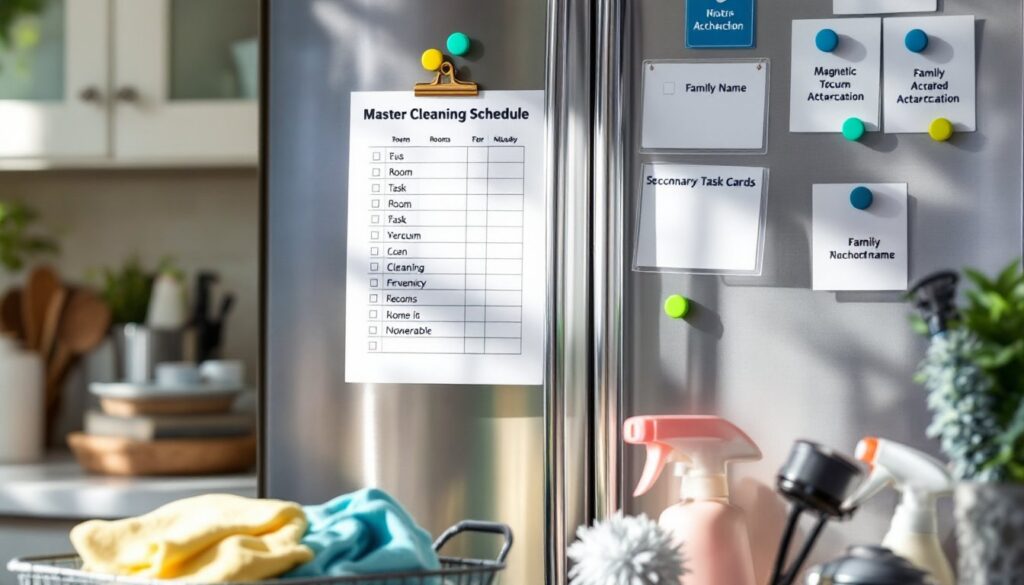
Build in accountability by tracking completion. A physical checklist on the fridge or a shared digital tool (Google Sheets, Notion, or a dedicated app) makes it visible. Check off tasks as they’re done: that visual progress is motivating and honest about what actually got finished. Monthly reviews prevent slow drift: sit down briefly to discuss what’s working and what’s falling behind, then adjust. Maybe someone’s weekly bathroom duty is too much, scale it back and redistribute. Perhaps daily kitchen counter duty isn’t happening, consider moving it to every other day. Top 10 Cleaning Tools can also motivate compliance by making assigned tasks faster and easier to complete. Transparency prevents silent frustration: if the schedule isn’t sustainable, change it rather than letting it become a source of household tension.
Tools, Supplies, and Product Inventory
Your master cleaning schedule should include a section that catalogs the tools and supplies needed to execute it. List essentials by room or task type: microfiber cloths, all-purpose spray, glass cleaner, bathroom scrub brush, mop and bucket, vacuum, broom and dustpan, toilet brush, and floor-appropriate cleaning products. Note quantities and replacement frequency, you might buy all-purpose spray quarterly but microfiber cloths twice yearly. A simple inventory list prevents the frustration of starting a task only to realize the product is empty or expired.
Quality matters. Worn-out mop heads, clogged spray nozzles, and bristles falling out of brushes make tasks slower and more frustrating. According to Good Housekeeping product reviews, investing in durable, well-rated tools, stainless-steel scrapers, microfiber cloths that last 100+ washes, and mops engineered for your floor type, saves money over time even though higher upfront cost. Store supplies logically: bathroom cleaners near bathrooms, floor cleaner by the mop, and all-purpose sprays in high-traffic rooms. Create a simple checklist of supplies consumed monthly, and review it quarterly. Running low on floor cleaner before you need it is manageable: discovering you’re completely out during your weekly floor day derails the schedule.
Tracking Progress and Adjusting Your Schedule
A master cleaning schedule is a living document, not a rigid law. Track completion for 2–4 weeks to identify patterns. Does the weekly schedule actually take 2 hours or 4? Are certain tasks consistently skipped? Is someone overwhelmed while another person has minimal work? Real data prevents the common mistake of planning an ideal schedule that no one can actually sustain.
Use tracking to make informed adjustments. If weekend deep-cleaning sessions always get postponed, redistribute those tasks into the week in smaller chunks. If a specific monthly task like cleaning inside the oven feels dreaded, maybe doing it every 6 weeks instead of monthly is more realistic. If someone repeatedly forgets their assignment, maybe they need a different task, a reminder system, or a task that happens more frequently so skipping isn’t possible. Schedule monthly 15-minute reviews, usually timed with a household meeting or Friday evening, to discuss what’s working. Build flexibility into assignments when life gets busy: sick days, work crises, and visiting guests all happen. A rigid schedule that falls apart during real life defeats the purpose. A sustainable schedule absorbs disruptions and adjusts without guilt.
Conclusion
A master cleaning schedule transforms maintenance from constant decision-making into automatic habit. The essential elements, daily/weekly/monthly breakdown, room-by-room lists, seasonal tasks, clear assignments, supply inventory, and honest tracking, create the structure that makes cleaning manageable. Start simple: list your tasks, assign them by frequency and room, and write down who’s responsible. Then actually use it for a month, adjust what isn’t working, and commit to the rhythm. A functioning schedule means your home stays cleaner with less mental load and less conflict. That’s worth the small effort it takes to build.