Table of Contents
ToggleClean gutters aren’t glamorous, but they’re essential. In New Jersey’s humid, rainy climate, with plenty of tree pollen, oak leaves, and seasonal storms, gutters clog fast. Neglected gutters back up water into your roof, fascia, siding, and foundation, turning a $200 cleaning into a $5,000 repair. Whether you’re tackling this yourself or calling a pro, understanding your gutter system and the regional challenges keeps your home dry and protected year-round. This guide walks you through the timing, tools, and technique for gutter cleaning that works in New Jersey’s unpredictable weather.
Key Takeaways
- Gutter cleaning in New Jersey prevents water damage that can cost $5,000+ in repairs by stopping overflow into your roof, fascia, siding, and foundation.
- Schedule gutter cleaning at least twice yearly—once in late fall (November) and again in spring (April–May)—with an additional early summer cleaning if you have large deciduous trees nearby.
- Use proper safety equipment including a 24–32 foot extension ladder with stabilizer, safety glasses, work gloves, and closed-toe boots; never skip safety gear or climb alone on tall homes.
- Remove debris by hand with a gutter scoop, then flush gutters and downspouts thoroughly with a garden hose, checking for standing water that can accelerate rust and breed mosquitoes.
- Hire a professional gutter cleaning service ($150–$500 depending on home size) if your home is over two stories, has a steep roof pitch, or you’re uncomfortable on ladders—professionals carry insurance and specialized equipment that protect both you and your home.
Why Gutter Cleaning Matters in New Jersey’s Climate
New Jersey sits in the Northeast’s transition zone between temperate and humid subtropical climates. That means heavy spring rains, summer storms, and fall leaves, lots of them. Your gutters face constant bombardment from pollen, tree debris, shingle granules, and sediment. Unlike drier states, New Jersey’s moisture lingers, creating ideal conditions for moss, algae, and standing water inside gutters. Standing water adds weight, invites mosquito breeding, and accelerates rust and corrosion on metal gutters. Beyond pest and decay concerns, clogged gutters let water overflow onto fascia boards (the trim behind the gutter), causing rot that spreads into your roof structure and rafters. A rotted fascia costs $1,000–$3,000 to replace, while water seeping into your foundation can create basement leaks or mold, neither cheap nor safe. Regular gutter cleaning prevents these cascading problems and extends the life of your roofing, siding, and foundation by decades.
When to Schedule Your Gutter Cleaning Throughout the Year
New Jersey’s seasons dictate gutter cleaning schedules. Most homeowners should clean gutters at least twice yearly: once in late fall (after leaves have mostly dropped, around November) and again in spring (April or May, after winter debris settles). If you have large oak, maple, or birch trees near your roof, add a third cleaning in early summer after seed pods and catkins drop. Winter itself is poor timing, frozen gutters are hazardous, and ice dams can trap water behind debris, forcing it under shingles. Spring flooding also peaks in April and May, so don’t wait until May 15th if heavy rain is forecast: aim for early April. After major storms (especially nor’easters or summer thunderstorms), inspect gutters for storm damage, loose hangers, or unexpected blockages. Some professionals recommend a quick visual check every month from your ground-level view, if you see sagging gutters or visible debris from the driveway, it’s time to climb up. In New Jersey’s variable weather, flexibility matters more than a fixed schedule.
Essential Tools and Safety Equipment You’ll Need
Before touching a ladder, gather your supplies. You’ll need:
Ladders and Access:
- A 24-foot or 32-foot extension ladder (16-foot rarely reaches a two-story home’s gutters safely). Aluminum is lightweight: fiberglass or wood is heavier but more stable on uneven ground.
- A sturdy ladder stabilizer or standoff (prevents the ladder from leaning against gutters, which damages them and creates a tipping hazard).
- Ladder levelers if your ground is sloped.
Cleaning Tools:
- A gutter scoop or small trowel to hand-remove leaves and sediment.
- A wet/dry shop vacuum (optional but speeds up the process: many attach to a gutter-guard bracket).
- A garden hose with a spray nozzle, 50–75 feet long, to flush downspouts and gutters.
- Wire brush to scrub stubborn debris or algae stains.
Safety Gear:
- Safety glasses to protect eyes from flying debris.
- Work gloves (leather or nitrile) for sharp edge protection and grip.
- Closed-toe boots with good ankle support: flip-flops and sneakers are slip hazards on a ladder.
- Ear protection if using a power washer or vacuum.
Optional but Helpful:
- A power washer (1,500–2,500 PSI) to blast sediment: keep nozzle angled downward to avoid forcing water up under shingles.
- Roof harness and rope if your roof is very steep (over 8:12 pitch) or your home is over 25 feet high. This is professional-grade, but safety comes first.
Don’t skimp on ladder stability. A fall from 20 feet can be fatal. If you’re uncomfortable on ladders or your home is over two stories, stop and hire a pro.
Step-by-Step DIY Gutter Cleaning Process
Preparing Your Home and Safety Setup
Choose a dry, clear day, wet leaves are slippery and heavier, and wet gutters corrode faster. Start early to use natural light and finish before dark. Position your ladder on level, solid ground, never on gravel, mulch, or soft earth. A ladder on unstable ground can sink or shift mid-climb, throwing you off-balance. Place the base 3–4 feet away from your home’s foundation (a rough rule: one foot away from the wall for every four feet of ladder height). Attach your stabilizer or standoff to keep the ladder from touching and denting the gutter or fascia. Wear all your safety gear before climbing, no exceptions. Have a helper hold the ladder base or stand nearby: solo ladder work on tall homes is risky. Test the ladder’s stability by applying downward pressure at ground level before you step onto it.
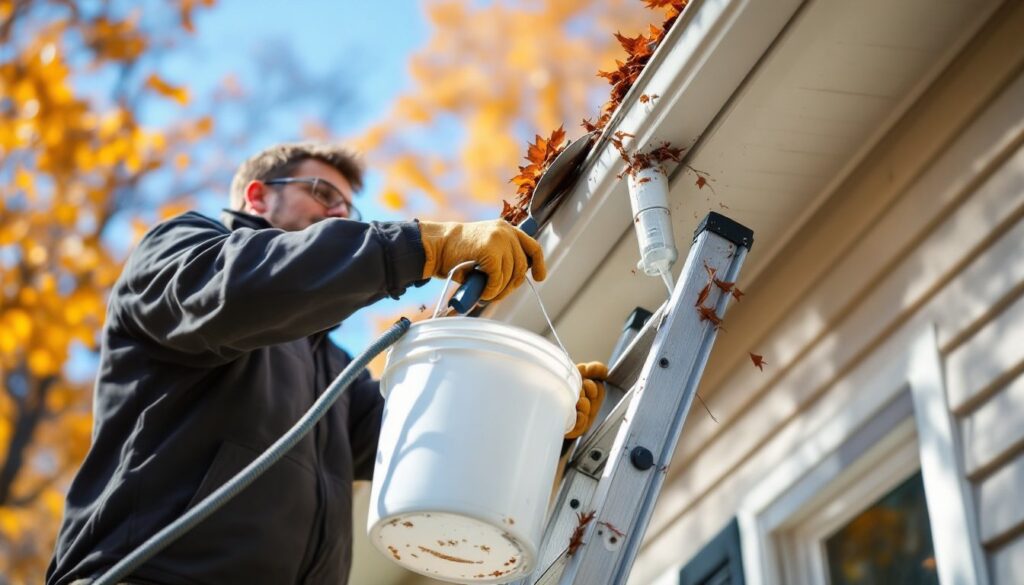
Once you’re positioned safely, tie a small bucket or bag to the ladder so you can toss debris without constantly climbing down. Some folks use a 5-gallon painter’s bucket with a rope or carabiner. Start at a downspout and work away from it: working toward the downspout concentrates debris, which you’ll flush through after hand-clearing.
Removing Debris and Flushing Your Gutters
Beggin with your gutter scoop or small trowel, lift leaves, twigs, and sediment out of the gutter channel. Push debris into your bucket as you go. Work steadily but don’t rush, a foot of sludgy buildup takes time. If you see thick, compacted sediment, dampen it with a spray bottle first so it doesn’t fly everywhere as you scrape. Pay close attention to valleys where gutters meet downspouts: debris bunches there, forming blockages.
Once you’ve hand-removed the bulk, connect your garden hose to the nearest outdoor spigot and turn the water on to a moderate flow. Start at the far end of the gutter section (opposite the downspout) and flush toward the downspout. As you spray, watch for water flow and listen for gurgles, that’s usually a sign of a nearly-clear downspout. If water pools or overflows, stop and dig deeper into that area: there’s likely a blockage. Use the spray nozzle to direct water into the downspout. If water backs up, the downspout is clogged. Disconnect the downspout at its base (or use a plumbing snake if it’s attached) and feed a drain snake or garden hose into it from the top. Let the hose run at high pressure to dislodge compacted leaves or bird nests. New Jersey’s gutters often harbor leaves and organic sludge that don’t flush easily, patience is required.
After flushing, refill your bucket and repeat the hose flush one more time to catch loosened sediment. Check that water drains smoothly along the gutter and exits cleanly from downspouts. If gutters still hold standing water after flushing, they may sag, a sign that hangers are loose or bent. Tighten hanger bolts (if accessible) or mark the spot for a professional to re-hang or level the gutter. Never leave gutters with standing water: mosquitoes breed in as little as a quarter-inch of stagnant water, and it accelerates deterioration.
When to Hire Professional Gutter Cleaners in New Jersey
Not every homeowner should climb a ladder, and that’s honest talk. Hire a pro if your home is over two stories tall, your roof pitch is very steep (over 8:12), or you’re uncomfortable on ladders. Professionals have roof harnesses, specialized equipment, and insurance that protect you from liability if something goes wrong. New Jersey has many gutter cleaning services: platforms like HomeAdvisor and ImproveNet can help you find local contractors, compare quotes, and read reviews. Expect to pay $150–$300 for a single-story home and $300–$500 for a two-story, depending on gutter length and debris volume. Some pros offer annual contracts ($250–$400/year) that bundle two or three cleanings plus minor repairs, which spreads cost and ensures timely service. If your gutters have sagging sections, separated seams, or rust holes, call a professional rather than attempting a DIY fix. These are structural issues that require special tools and techniques. You can also find licensed gutter cleaning professionals in New Jersey cities to get quotes and schedule service. References, licensing, and insurance matter, a reputable pro carries general liability insurance and a workers’ compensation policy so you’re protected if they’re injured on your property.