Table of Contents
ToggleGutters might not be glamorous, but they’re among the most critical lines of defense your Arlington Heights home has against water damage. When leaves, twigs, and debris pile up, water backs up instead of flowing away, leading to foundation problems, roof leaks, and rotting fascia boards. Whether you’re a hands-on DIYer or prefer to call in professionals, understanding your gutters keeps your home safe and saves you thousands in repairs. This guide walks you through everything Arlington Heights homeowners need to know about gutter cleaning, from recognizing warning signs to choosing the right maintenance strategy for the Midwest climate.
Key Takeaways
- Regular gutter cleaning in Arlington Heights prevents costly water damage by protecting your foundation, roof, and landscaping from Midwest freeze-thaw cycles and heavy downpours.
- Clean gutters twice yearly—late fall before winter and early spring before summer rains—or once annually if gutter guards are installed.
- DIY gutter cleaning is cost-effective for single-story homes but requires proper safety equipment (extension ladder, gloves, safety glasses) and dry conditions; two-story homes warrant professional services.
- Professional gutter cleaners in Arlington Heights typically charge $100–$300 for single-story homes and $200–$400 for two-story homes, with seasonal contracts offering 10–15% savings.
- Prevent future debris buildup by installing gutter guards ($8–$15 per linear foot), trimming overhanging tree branches, and extending downspouts 4–6 feet from your foundation.
Why Regular Gutter Maintenance Matters For Your Arlington Heights Home
Clean gutters are non-negotiable in Arlington Heights. The area’s freeze-thaw cycles, especially in winter, cause ice damming when water pools in clogged gutters and refreezes, pushing water under shingles and into your attic. Heavy Midwest downpours and spring snow melt dump enormous volumes of water: if gutters are blocked, that water has nowhere to go except down your walls and into your foundation. Over time, this leads to basement flooding, foundation cracks, and wood rot that costs far more than regular maintenance ever would.
Your gutters also protect your landscaping and hardscaping. Standing water that overflows creates erosion patterns around your foundation, undermines soil stability, and can damage retaining walls. When gutters work properly, water is directed away in a controlled manner, protecting both the structure and the grounds.
Signs Your Gutters Need Cleaning
Don’t wait for a rainstorm to discover a problem. Watch for these red flags:
• Visible debris poking out of the gutter or downspout
• Sagging sections that pull away from the fascia
• Water spilling over the side during rain instead of flowing through the downspout
• Wet soil or erosion patterns directly below gutters
• Granules in your downspouts (a sign of roof deterioration, often mixed with gutter sludge)
• Plant growth (moss or seedlings) in the gutter itself
• Rust or corrosion spots on aluminum or steel gutters
• Ice dams forming along the eaves in winter
If you see any of these, cleaning is overdue.
Best Time Of Year To Clean Gutters In Arlington Heights
Arlington Heights has two peak gutter-cleaning windows. Late fall (October–November) is the most critical. Deciduous trees drop massive amounts of leaves, and you need gutters clear before the first freeze. Ice damming is a real threat once temperatures drop, so get this done before winter sets in.
Early spring (April–May) is your second window. Winter debris, shingle granules, and any buildup from spring thaws need clearing before the summer rain season. If you’re prone to heavy pollen, a spring cleaning also removes winter’s accumulation.
Alternatively, if you install gutter guards or screens, you’ll reduce cleaning frequency to once per year. Even with guards, but, some maintenance is still needed, they’re not maintenance-free, even though marketing claims. In Arlington Heights’s climate, plan for at least two cleanings annually if you don’t use guards, or one thorough cleaning per year with guards in place.
DIY Gutter Cleaning: Step-By-Step Instructions
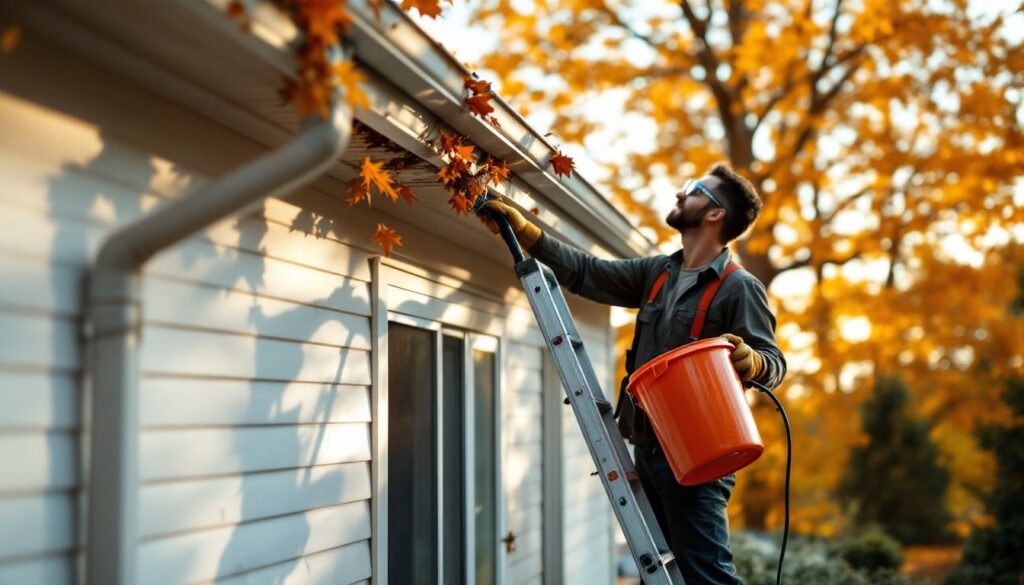
If you’re comfortable on a ladder and have a clear day, DIY cleaning is straightforward. Most homeowners can handle single-story homes: two-story homes or steep pitches warrant calling professionals.
Essential Tools And Safety Precautions
You’ll need:
• A sturdy extension ladder (at least 20 feet for a single-story home: verify it reaches the gutters safely)
• Work gloves, leather or rubber, nothing thin (sharp gutter edges cut through flimsy gloves)
• Safety glasses (debris flies)
• A gutter scoop or small shovel (plastic is gentler on gutters: avoid sharp metal)
• A bucket to carry debris (5-gallon buckets work well: some hang from ladder rungs)
• A garden hose with a spray nozzle for rinsing
• Optional: a wet/dry vacuum with gutter attachments (faster, less hands-on)
Safety first:
- Wear your safety glasses and gloves every time.
- Set your ladder on level ground: use a helper to stabilize it.
- Never lean over the side of the ladder, move it instead.
- Work on dry days: wet leaves and algae are slippery.
- If you’re uncomfortable on ladders or working at height, hire professionals.
Step-by-step:
- Position your ladder against the gutter at a safe angle (the base should be 1 foot away from the wall for every 4 feet of ladder height).
- Scoop out large debris, leaves, twigs, sediment, into your bucket. Work from one end toward the downspout.
- Pay attention to corners and valleys where debris collects most heavily.
- Check the downspout for clogs. If water backs up, disconnect the downspout at the bottom (or remove the strainer cap) and flush it with your hose from above.
- Flush the entire gutter with your hose, working from the opposite end of the downspout so water flows toward it.
- Inspect for damage, look for separation from the fascia, holes, or rust, and note repairs needed.
The entire process typically takes 1–3 hours for a single-story home, depending on how clogged the gutters are. Budget extra time if you find downspout clogs: breaking them free can take patience.
When To Call Professional Gutter Cleaners In Arlington Heights
Professional cleaners make sense when:
• Your home has multiple stories or a steep roof pitch (ladder work becomes risky).
• You have health conditions that make ladder work unsafe (balance issues, heart conditions, joint problems).
• Your gutters are heavily clogged with compacted sediment or ice (more dangerous and time-consuming to clear safely).
• You lack the right equipment (a 40-foot extension ladder is expensive if you use it once).
• You value your time more than the cost difference (a pro might charge $150–$300: you’d spend 3+ hours).
Arlington Heights homeowners can find vetted professionals through platforms like top-rated gutter cleaning services in Arlington Heights or services like HomeAdvisor, which help you compare quotes and read customer reviews. Get at least three quotes before hiring: price varies based on home size, roof complexity, and debris volume.
Most pros charge $100–$300 for a single-story home, $200–$400 for two-story homes. Some offer seasonal contracts for twice-yearly cleaning, which can save 10–15% per visit. If your gutters need structural repair (sagging sections, rust-through holes, gutter replacement), professionals spot these issues and can handle them without extra trips.
Cost-Effective Maintenance Tips To Prevent Future Buildup
Prevention beats reactive cleaning. Here’s how to cut down on gutter work:
Install gutter guards or leaf screens. Mesh or solid covers keep debris out while allowing water through. They don’t eliminate the need for cleaning entirely, but they reduce frequency and the amount of gunk buildup. Quality guards cost $8–$15 per linear foot installed: for a 150-foot gutter run, that’s $1,200–$2,250 upfront but pays for itself in fewer cleanings over 10+ years.
Trim tree branches hanging over your roof. Dead limbs drop: overhanging foliage sheds leaves directly into gutters. Trimming 4–6 feet back from the roofline reduces debris volume by 40–60%.
Extend your downspouts away from the foundation. Gutters alone don’t solve the problem if water spills out 2 feet from your house. Extensions or splash blocks should direct water at least 4–6 feet away. This prevents foundation saturation and basement seepage.
Keep gutters sloped correctly. Gutters should slope toward downspouts (typically a 1/8-inch drop per 10 feet). If sections sag or are installed level, water pools and debris settles. A professional can re-pitch sagging gutters or install hangers to restore slope.
Schedule maintenance during your annual home checklist. If you use renovation planning guides or create a seasonal maintenance calendar, include gutter inspection in spring and fall. Consistency prevents the “I forgot until it rains” panic.
Proper maintenance costs far less than repairing water damage, foundation issues, or roof leaks. In Arlington Heights’s climate, with heavy rain and freeze-thaw cycles, gutters are one of your best investments for home longevity.
Final Thoughts
Gutter cleaning isn’t flashy, but it’s essential for Arlington Heights homeowners. Whether you tackle it yourself on a dry fall day or hire a professional, staying on top of gutter maintenance protects your foundation, roof, and landscaping. The cost of cleaning, whether your time or a professional’s labor, is a fraction of what water damage repairs will cost. Make it part of your annual routine, and your home will thank you for years to come.