Table of Contents
ToggleClimbing a ladder to clean gutters is one of those home maintenance tasks that lands on nobody’s “fun” list. Heights, loose debris, and the constant worry about losing your balance make it a chore most homeowners dread. That’s where a gutter cleaning extendable pole becomes genuinely useful, not as a luxury, but as a practical upgrade that keeps you on solid ground while you tackle accumulated leaves, twigs, and sediment. In 2026, the technology behind these poles has improved enough that they’re now a smart investment for anyone serious about maintaining their home without unnecessary risk. This guide walks you through what makes them worthwhile, what features actually matter, and how to use one safely and effectively.
Key Takeaways
- A gutter cleaning extendable pole eliminates ladder climbing and reduces fall risks, the leading cause of home-related injuries, while keeping you safely on the ground.
- Choose a pole that extends 25–30 feet, weighs 6–10 pounds, and features reliable twist-lock or clip-lock mechanisms to avoid slipping during use.
- Start cleaning gutters from high to low away from downspouts, work on calm, dry days, and always wear gloves, safety glasses, and an N95 mask to protect against sharp edges and mold spores.
- An extendable pole with adjustable head attachments saves time by eliminating constant ladder repositioning and handles multiple cleaning scenarios with interchangeable scoops and brushes.
- After clearing debris, inspect your gutters for sagging sections, rust, or cracks that may require professional repair, and test downspouts with water to detect blockages.
Why Extendable Poles Are A Game-Changer For Gutter Maintenance
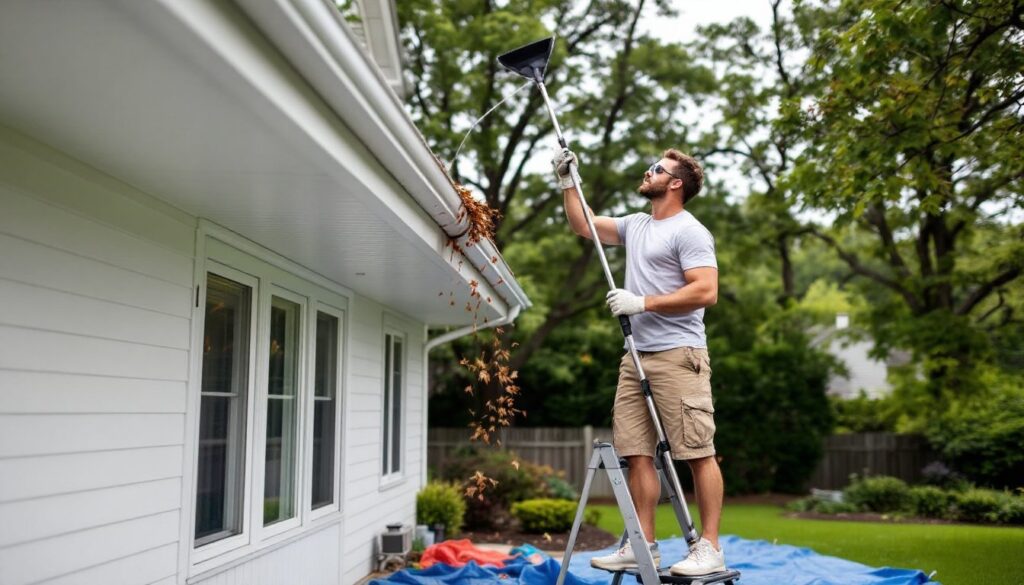
The traditional approach, hauling out a 20-foot ladder, climbing to shoulder height, and working one-handed while holding a scoop or brush, puts unnecessary stress on your back, shoulders, and knees. An extendable pole eliminates most of that strain by letting you stand on the ground or a sturdy step stool while reaching second-story gutters. That’s not just comfort: it’s a significant safety upgrade. Falls from height remain one of the leading causes of home-related injuries, and anything that keeps you lower and more stable reduces risk dramatically.
Beyond safety, extendable poles save time. Instead of repositioning a ladder every 6 feet, you move the pole along the gutter line. You’re not fighting gravity as much, your breathing stays normal, and you can actually focus on the work rather than white-knuckling the ladder. Many poles now come with interchangeable head attachments, scoops, brushes, and even powered heads, so one tool handles multiple scenarios. For gutters that empty into corners or run along narrow side yards where ladder placement is awkward, an extendable pole becomes almost essential.
Key Features To Look For In A Quality Gutter Cleaning Pole
Not all extendable poles are built the same, and buying the wrong one leads to frustration and wasted money. The best poles balance reach, weight, and durability, and knowing which details matter helps you choose wisely.
Length And Reach Capabilities
Most homes sit 20 to 30 feet wide, and gutters on single-story sections sit about 10 to 12 feet high, while second-story gutters reach 20 to 25 feet. A pole that extends to 25 feet handles most residential gutters, but if your home has a steep roofline or three stories, you might need 30 feet. The catch: longer poles are heavier and harder to control at full extension. Look for poles that telescope in segments, typically three or four sections, so you can extend only as far as needed. Also check the collapsed length: a 25-foot pole that collapses to 6 feet is manageable to carry and store, while one that collapses to 10 feet becomes unwieldy in a garage.
Reach is also about the head attachment. A pole alone does nothing: the scoop, brush, or powered head at the end determines how effectively you clean. Adjustable heads that angle up to 45 degrees let you clean valleys and corners without repositioning the entire pole. Some premium models come with aluminum or fiberglass tubes that attach modularly, so you can mix and match depending on the job.
Weight And Durability
A pole that’s too heavy fatigues your arms and shoulders within minutes, turning a 30-minute job into an hour-long ordeal. Aim for something between 6 and 10 pounds: lighter is better if you’re doing this solo. Aluminum is the industry standard, light, corrosion-resistant, and strong enough for residential work. Avoid cheap plastic poles: they flex too much under load and tend to crack or snap after a season or two.
Durability also depends on joints and locking mechanisms. Look for poles with twist-lock or clip-lock segments: these hold firm without slipping as you reach upward. Cheap poles use friction-fit sleeves that loosen during use, and you end up chasing your own pole as it telescopes unexpectedly. Read reviews on how the locking system holds under real-world pressure, especially when the head is caked with wet debris.
Step-By-Step Guide To Cleaning Gutters With An Extendable Pole
Before you start, gather your gear. You’ll need the extendable pole with a scoop or brush head (most come with both), a ladder or sturdy step stool for low sections, a bucket or tarp to catch debris, work gloves (nitrile or leather), safety glasses, and possibly a dust mask if your gutters are caked with decomposed leaves. Wet leaves create a sludgy mess, so gutter work is best done after a few dry days or shortly after a light rain that settles dust.
1. Set up your work area. Place a tarp under the run of gutter you’re cleaning to catch falling debris. Position your step stool or stable platform where you can comfortably reach the gutter with the pole mostly vertical. The lower your arm angle, the better your control.
2. Extend the pole to the length you need. Don’t automatically go full extension: start with two or three segments extended. You can always pull another section if needed. Ensure each locking mechanism clicks into place audibly or until resistance stops.
3. Work from high to low (away from downspouts first). Start at the high end of a gutter run and work toward the downspout. This prevents you from pushing debris backward or shoving clogs deeper into the system. Use a scooping motion if your pole has a scoop head, or a raking motion with a brush head, pulling debris toward you into the bucket or onto the tarp below.
4. Clear the downspout. Once the gutter channel is clear, test the downspout by running water from a hose. If water backs up, the downspout is clogged. Tap the elbow section with a soft mallet, or feed the pole with a brush head down the downspout to dislodge the blockage. Never force it: if it’s truly stuck, you may need a plumbing snake or professional help.
5. Inspect for damage. While you’re up there, look for sagging sections, rust spots, separated seams, or cracks. These are signs of structural issues that warrant repair or replacement. Simple copper or aluminum patches work for small holes, but larger damage often needs professional attention. Resources like Bob Vila and Family Handyman offer repair guides if you find issues during cleaning.
Safety Tips Every Homeowner Should Know
Even though an extendable pole reduces height hazards, the work still carries real risks. Always wear work gloves to protect against sharp metal edges, rust, and the occasional wasp nest hiding in debris. Safety glasses keep dirt and splinters out of your eyes. If you’re wearing a dust mask, make sure it’s rated N95 or better: decomposed leaf matter can harbor mold spores, and prolonged exposure isn’t pleasant.
Never work on a windy day. Poles become awkward to control in gusts, and you lose balance faster when working from a step stool. Check the weather and pick a calm afternoon. Also avoid working immediately after heavy rain: wet gutters are slippery, and waterlogged debris weighs more, straining your shoulders. If you’re prone to falls or balance issues, or if your home is taller than two stories, strongly consider hiring a professional gutter cleaner. It’s not failure, it’s respecting your physical limits.
When you’re on a step stool with the pole extended upward, your center of gravity shifts. Keep your feet firmly planted, and don’t overreach sideways. If you can’t comfortably reach an area, move the stool rather than lean precariously. Also, keep one hand free for balance whenever possible, that means the pole goes in one hand and you stabilize yourself with the other against the gutter or nearby trim. Never hold the pole with both hands while standing on an unstable surface. Finally, exterior cleaning often involves working at heights, so respect the fundamentals: good footwear with grip, clear sightlines, and a second person nearby who can call out hazards or steady the step stool.
Conclusion
A quality gutter cleaning extendable pole transforms a miserable, dangerous task into something manageable and safe. Focus on reach that matches your home’s height, weight you can control comfortably, and locking mechanisms that hold firm. Follow the step-by-step process, respect the safety guidelines, and you’ll protect both your gutters and yourself, no contractor required.