Table of Contents
ToggleMost homeowners understand the difference between tidying up and actually getting clean. Regular vacuuming and surface wiping keep things presentable, but they don’t tackle the grime that builds up over months or years. Deep home cleaning services fill that gap, they’re the thorough reset that leaves your house genuinely spotless. Whether you’re prepping a home for sale, recovering from a hectic season, or simply want to restore your living space to showroom condition, knowing what professional deep cleaning entails helps you decide if it’s right for your situation. This guide walks you through what to expect, why it matters, and how to find a service that fits your home and budget.
Key Takeaways
- Deep home cleaning services go far beyond regular maintenance by targeting hard-to-reach areas like inside appliances, behind furniture, and ceiling corners that accumulate grime over time.
- Professional deep cleaning typically takes 4 to 8 hours for an average home and should be scheduled 2-4 times per year to remove dust, allergens, and buildup that weekly tidying leaves behind.
- Kitchens and bathrooms require the most intensive attention during deep cleans, including degreasing stovetops, scrubbing grout, descaling fixtures, and sanitizing hard-water stains.
- When choosing a deep cleaning service, request at least three quotes, verify bonding and insurance coverage, and check reviews on platforms like Google and HomeAdvisor to identify reputable providers.
- Flooring deep cleaning using steam extraction or hot-water methods removes embedded dirt and allergens while baseboard cleaning reveals months of accumulated dust buildup.
- Schedule deep home cleaning services during off-season periods when demand is lower to maximize your budget and achieve better pricing than during spring or move-related busy seasons.
What Are Deep Home Cleaning Services?
Deep cleaning is a comprehensive, top-to-bottom service that goes far beyond standard housekeeping. While regular cleaning focuses on visible surfaces and high-traffic areas, deep cleaning targets the spots most people miss: inside appliances, behind furniture, ceiling corners, and baseboards.
A typical deep clean includes washing light fixtures, wiping down cabinet interiors, scrubbing grout between tiles, cleaning inside the oven and microwave, and degreasing kitchen surfaces. In bathrooms, professionals tackle hard-water stains, deep-scrub shower tiles, and sanitize every corner. Bedrooms and living areas get thorough dusting, including air vents and crown molding.
Most deep cleaning services take 4 to 8 hours for an average home, depending on size and current condition. The goal isn’t just to make your place look clean, it’s to remove accumulated dust, allergens, and buildup that regular cleaning leaves behind. According to differences between standard house cleaning and deep cleaning, the methods and time investment differ significantly from routine maintenance.
Why Deep Cleaning Differs From Regular Maintenance
Regular cleaning maintains your home’s appearance and hygiene between deep cleans. You’re wiping counters, sweeping floors, and dusting surfaces, things you do weekly or bi-weekly to keep clutter and visible dirt at bay.
Deep cleaning, by contrast, is restorative. It addresses grime buildup, sanitizes hard-to-reach areas, and often requires specialized equipment like steam cleaners or extraction machines. Regular cleaning might take 2-3 hours for a medium home: deep cleaning takes considerably longer because it’s methodical and thorough.
Think of regular maintenance as keeping your car looking presentable, while deep cleaning is the equivalent of a professional detailing. One keeps things tidy: the other restores condition. Most homeowners benefit from scheduling deep cleaning 2-4 times per year, with regular cleaning filling the gaps in between. Seasonal deep cleans, especially before winter or after renovations, also prevent dust and debris from settling permanently into your home.
Key Areas Professional Services Cover
Kitchen and Bathroom Deep Cleaning
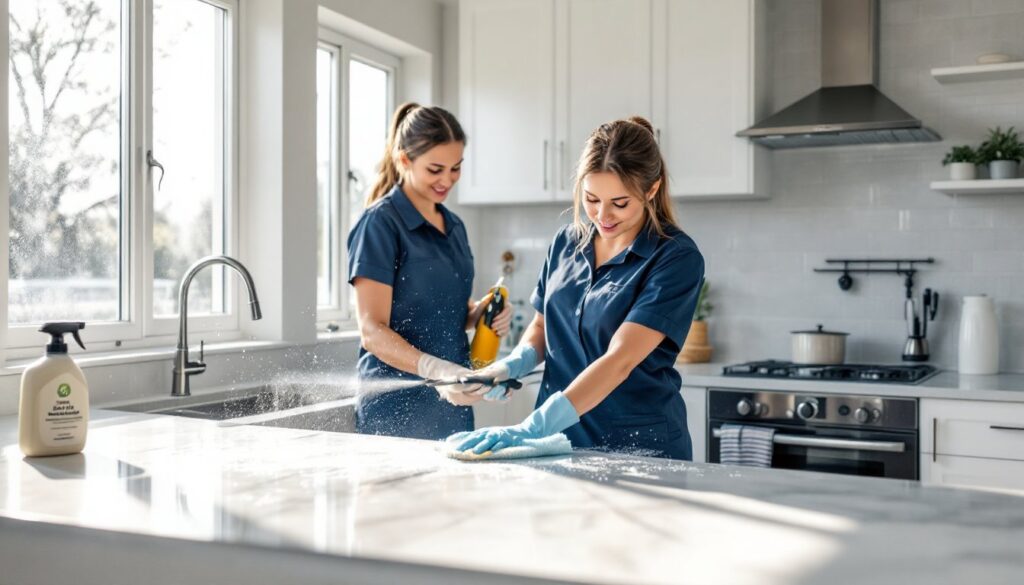
Kitchens and bathrooms see the most intense use and accumulate the most grime, so they demand the most attention during a deep clean. In the kitchen, professionals degrease stovetops and ranges, wipe down cabinet fronts and interiors, descale faucets, and clean inside the refrigerator (coils included) and microwave. Oven interiors get a thorough scrub with specialized degreasers. Sink basins and countertops receive sanitization, and floors are cleaned under and around appliances.
Bathroom deep cleaning involves scrubbing shower walls and glass enclosures with grout-safe cleaners, removing hard-water deposits, sanitizing toilets inside and out, and wiping down tile grout to restore its original appearance. Exhaust fans, which trap moisture and dust, get their screens cleaned. Mirrors, fixtures, and baseboards all receive attention. Many professionals use home organization tips and cleaning hacks to maximize efficiency and achieve spotless results.
Flooring and Baseboards
Flooring is often overlooked in regular cleaning but shows dramatic improvement after deep cleaning. Professionals steam-clean carpets, strip and polish hardwood floors, and deep-scrub tile grout lines. Baseboard dust and pet hair buildup gets removed entirely, revealing the true color underneath.
Hard flooring like tile and vinyl benefits from extraction cleaning, which pulls embedded dirt and allergens up from the surface. Carpet deep cleaning uses hot-water extraction to lift stains and odors that vacuuming can’t reach. Baseboards are wiped down completely, removing months of dust accumulation. This work alone justifies scheduling a professional service, it’s detail-oriented labor that few homeowners have time for regularly.
How to Choose the Right Deep Cleaning Service
Start by identifying what areas matter most to your household. Do you have pets that shed heavily? Allergies that require extra attention to dust and mold? A large kitchen that needs meticulous degreasers applied? Being clear about priorities helps you communicate with potential services and ensures they focus on what matters to you.
Request quotes from multiple providers, get at least three. A reputable service will ask detailed questions about your home’s square footage, flooring types, and problem areas before quoting a price. Red flags include vague pricing, reluctance to provide references, or guarantees that sound too good to be true. Good services should be bonded and insured, protecting both you and their staff in case of accidents or damage.
Read reviews carefully, especially on local platforms like Google and contractor matching services such as HomeAdvisor, which also offers cost estimators and project planning guidance. Look for patterns in feedback, consistent praise for thoroughness or complaints about rushing suggest the service’s actual approach. Ask your chosen service if they use eco-friendly products (important if anyone in your home has sensitivities) and confirm what areas are included and excluded from the quote.
Timing also matters. Seasonal demand affects pricing, spring and move-related cleans are pricier than off-season work. If budget is tight, consider scheduling during slower periods. Finally, establish clear expectations: Will they move furniture? Rearrange items on shelves? How will they handle your pets? A good service clarifies these points upfront and follows through professionally.
Conclusion
Deep home cleaning services restore your living space to its best condition, tackling the accumulated grime that regular cleaning can’t address. Whether you schedule them seasonally, before a major life event, or when you need a reset, professional deep cleaning delivers results that match the effort and cost. By understanding what these services cover and taking time to choose a reputable provider, you’ll get genuine value, and a genuinely clean home.