Table of Contents
TogglePensacola’s humid subtropical climate brings frequent rain, afternoon thunderstorms, and plenty of oak trees, which means your gutters work overtime collecting debris. Clogged gutters don’t just look neglected: they damage fascia boards, cause foundation issues, and invite pest infestations. Whether you’re dealing with leaf buildup from fall or sediment from our sandy weather, gutter cleaning in Pensacola is a project most homeowners can handle themselves with the right approach. This guide walks you through exactly what you need, how to stay safe at height, and when it’s worth calling a pro.
Key Takeaways
- Pensacola’s humid subtropical climate demands gutter cleaning twice yearly (spring and fall) due to tropical storm debris, oak leaves, and sandy silt that accumulate faster than in drier regions.
- Clogged gutters cause serious damage including fascia rot, foundation cracks, and pest infestations, making regular gutter cleaning in Pensacola essential for protecting your home’s structural integrity.
- Essential safety equipment includes an extension ladder with stabilizer bar, safety harness, gloves, and a helper—never skip PPE when working at height, especially in Pensacola’s weather conditions.
- Remove large debris first with a gutter scoop, flush with a garden hose, and clear downspout blockages using a plumbing snake; standing water after flushing signals sagging gutters or pitch issues.
- Call a professional if gutters are sagging, rusted, pulling away from fascia, or if you’re uncomfortable at height—fall injuries cost far more than hiring licensed contractors for gutter cleaning and repair.
Why Gutter Cleaning Matters In Pensacola’s Climate
Pensacola’s weather is uniquely demanding on gutters. Between late summer through winter, you’re managing tropical storm debris, oak leaves, pine needles, and sandy silt blown in from nearby beaches. Unlike drier climates where gutters might clog every few years, Gulf Coast homes often need cleaning twice a year, spring and fall.
When gutters stay clogged, water backs up and pools on the roof, accelerating shingle decay. The standing water also works into soffit gaps, rotting wood framing behind your fascia board. Ground-level water damage is equally serious: pooling water at the foundation creates hydrostatic pressure that can crack basement walls or compromise crawl space integrity. Plus, Pensacola’s humidity makes organic debris decompose fast, turning leaves into wet sludge that hardens and becomes much harder to remove.
Regular cleaning, every six months or after heavy storms, keeps water flowing and prevents thousands in structural repairs down the line.
Essential Tools And Materials You’ll Need
Before you climb a ladder, gather these items:
Ladder & Safety Gear:
• Stable 20–24 ft extension ladder (aluminum is lighter, fiberglass is more durable)
• Ladder stabilizer bar or standoff to keep gutters from bending under pressure
• Safety harness or rope (especially if working alone)
• Work gloves (nitrile or leather: gutters get sharp)
• Safety glasses to keep debris from your eyes
• Dust mask for moldy or sandy sediment
Cleaning Equipment:
• Gutter scoop or small hand shovel (plastic scoops won’t damage aluminum gutters)
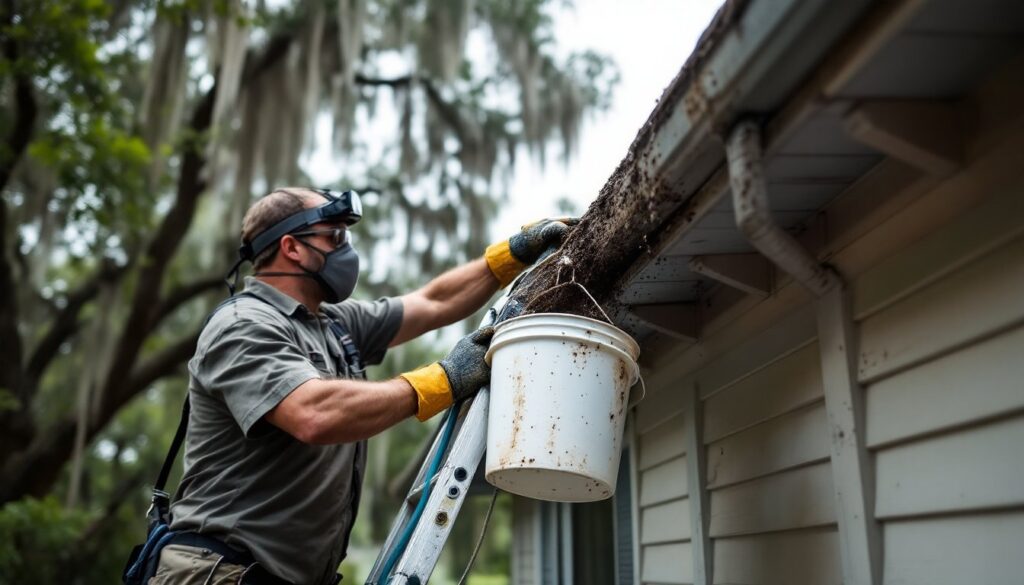
• 5-gallon bucket with rope to haul debris without climbing down repeatedly
• Garden hose with spray nozzle for final flushing
• Pressure washer (optional but speeds work: use 60 PSI or lower to avoid gouging aluminum)
Miscellaneous:
• Tarp or drop cloth to catch debris below
• Headlamp for overcast Pensacola days
• Second person for stability and safety (highly recommended)
Many homeowners rent ladders and pressure washers from local hardware stores rather than buying, which keeps costs reasonable and avoids storage headaches.
Step-By-Step Gutter Cleaning Process
Safety Preparation And Setup
- Check the weather. Avoid rainy or windy days: Pensacola’s afternoon storms move fast, and wet gutters are slippery.
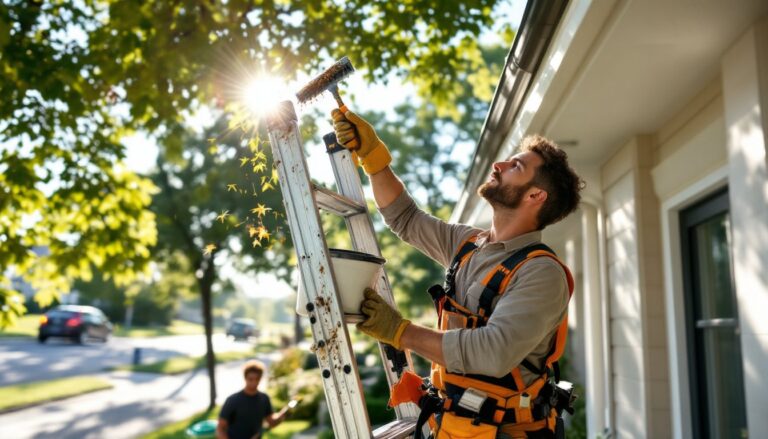
- Set up your ladder at the least steep part of your roof slope. Position it 3 feet away from the wall (1 foot away for every 4 feet of height). Use a stabilizer bar to distribute weight and prevent the ladder from damaging gutter edges.
- Have your helper hold the base while you climb. If working alone, tie a rope around the ladder base to anchor it to a porch post or ground stake.
- Wear all PPE: gloves, glasses, and a dust mask. Gutters accumulate mold spores and silica from sand, especially in humid Florida.
- Test the gutter’s stability before putting your full weight on it. Gutters shouldn’t sag or flex excessively: if they do, you may have ice dam backup or structural damage that requires professional repair.
Removing Debris And Unclogging
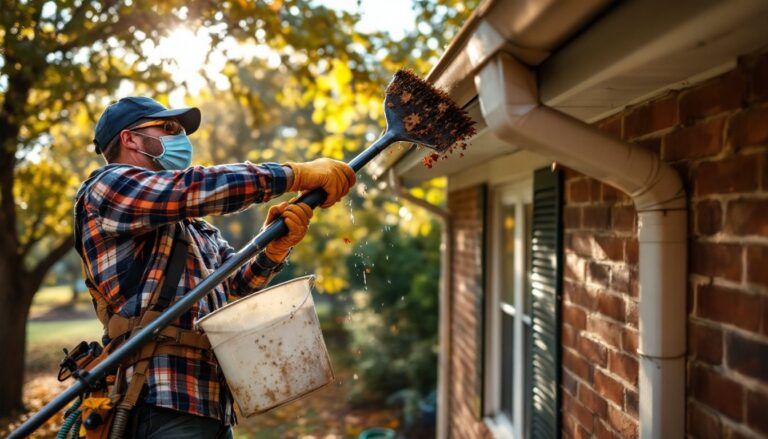
- Scoop out large debris first. Using a gutter scoop or small shovel, work from high to low, pushing debris into your bucket tied to the ladder. Don’t toss debris to the ground, it damages landscaping and invites cleanup headaches.
- Break up stubborn sediment. Wet, compacted leaf sludge in Pensacola gutters often hardens like concrete. Use the edge of your scoop or a small flathead screwdriver to gently chip and dislodge it.
- Flush the gutter and downspout. Once visible debris is removed, run your garden hose from the high end of the gutter, letting water flow toward downspouts. Water should drain steadily without pooling.
- Clear downspout blockages. If water backs up, the downspout is likely clogged. Use a plumbing snake or flush with your hose at high pressure (aimed downward into the spout). For severe blockages, temporarily disconnect the downspout elbow and push debris through from above.
- Check gutter pitch. As you flush, watch for water pooling in certain spots. Sagging gutters should drain completely within a few minutes. If standing water remains, the gutter may be out of pitch or damaged, professional gutter repair services in Pensacola can assess and correct this.
- End with a final spray. Once everything drains cleanly, do a final high-pressure rinse (use 60 PSI or lower) to dislodge remaining fine sediment and rinse downspouts from bottom to top, ensuring no new blockages form.
When To Call A Professional In Pensacola
Some situations demand professional help. If gutters are sagging, pulling away from the fascia, or showing rust-through holes, cleaning won’t fix the underlying damage, they need replacement. That’s a job for licensed contractors.
Guard against falls too. If your roof pitch is steep (over 8:12), if you’re uncomfortable at height, or if you’re over 60 and working alone, hire someone. Fall injuries aren’t worth a $200 DIY savings. HomeAdvisor provides cost estimators and contractor matching so you can compare quotes from vetted local pros.
Also consider professional cleaning if you haven’t touched your gutters in years, or if you suspect mold, asbestos siding, or structural damage. Pensacola’s humidity makes mold growth common, and older homes sometimes have hazardous materials that require certified removal. Bob Vila’s expert contractor recommendations include guidance on when DIY ends and pro involvement begins, especially useful for knowing structural red flags.
Conclusion
Gutter cleaning in Pensacola is manageable DIY work if you’re comfortable on a ladder and willing to take safety seriously. Twice-yearly cleaning, ideally spring and fall, keeps water flowing, protects your foundation, and extends gutter life. But don’t tough it out if the job feels unsafe or reveals hidden damage. A professional visit costs less than replacing fascia or repairing foundation cracks, and it’s always the smarter play when your instincts say so.