Table of Contents
ToggleGutters protect your home’s foundation, siding, and landscaping by channeling water away from where it can cause serious damage. In Brampton’s climate, with heavy spring snowmelt, summer thunderstorms, and fall leaves, gutters work overtime. Clogged gutters lead to water backing up under fascia boards, rotting wooden trim, cracking foundations, and erosion around your property. Many homeowners put off gutter cleaning, but it’s one of the most cost-effective maintenance tasks you can do yourself. This guide walks you through why regular cleaning matters, the best timing for Brampton’s weather patterns, how to DIY safely, and when to bring in professionals.
Key Takeaways
- Regular gutter cleaning in Brampton prevents foundation damage, basement leaks, and erosion by channeling water away from your home during heavy spring snowmelt, summer storms, and fall leaf season.
- Clean gutters twice yearly—late April/early May and mid-October through November—to avoid 90% of water damage issues that can cost over $10,000 in foundation repairs.
- DIY gutter cleaning requires basic safety equipment (extension ladder, gloves, safety glasses) and takes 2–3 hours for single-story homes with a helper; skip the ladder work if you’re uncomfortable at height.
- Standing water in gutters, sagging sections, foundation pooling, or granule loss are early warning signs that your gutter system needs immediate cleaning or professional repairs.
- Professional gutter cleaning services in Brampton cost $150–500 depending on home size and are worth the investment for multi-story homes, structural repairs, or when you lack ladder safety confidence.
Why Regular Gutter Cleaning Matters For Your Brampton Home
Gutters filled with leaves, dirt, and organic debris stop working. Water can’t flow toward downspouts, so it pools and overflows. That standing water adds weight, sometimes 50+ pounds for every 10 feet of clogged gutter, putting stress on fascia boards and hangers. Over time, the gutter pulls away from the house, creating gaps where water rushes behind the gutter entirely.
Water that seeps behind gutters or overflows at the foundation saturates soil and can infiltrate basements or crawl spaces. In Brampton’s freeze-thaw cycles, that moisture expands and contracts, widening foundation cracks. Landscape beds erode, downspout discharge doesn’t reach proper drain zones, and vegetation around your home gets waterlogged. Regular cleaning prevents these costly problems, foundation repairs often exceed $10,000, while gutter cleaning costs a fraction of that. Homeowners who clean gutters twice yearly (spring and fall) avoid 90% of these issues.
Best Times To Clean Your Gutters In Brampton’s Climate
Brampton’s weather creates a predictable maintenance calendar. Spring cleanup happens in late April or early May, after the last snow melts and tree buds open. Winter debris, packed leaves, twigs, granules from roof shingles, clogs systems. By mid-May, new leaves are filling gutters again, so don’t wait. Late fall (mid-October through November) is critical: massive leaf drop means a second cleaning is essential before winter. After big windstorms or heavy rain events, do a quick visual check from the ground, you might spot standing water or leaf dams.
In summer, if you haven’t cleaned since spring, a July or August check catches problems early. Brampton can see 50–100 mm of rain in single storms, and clogged gutters overflow immediately. If you notice water pouring over the edge during rain, stop and clear the blockage, it won’t resolve itself. Timing matters: clean in dry weather when gutters are accessible and safe, never during rain or immediately after when surfaces are slick.
DIY Gutter Cleaning: Step-By-Step Guide For Homeowners
Essential Tools And Safety Equipment You’ll Need
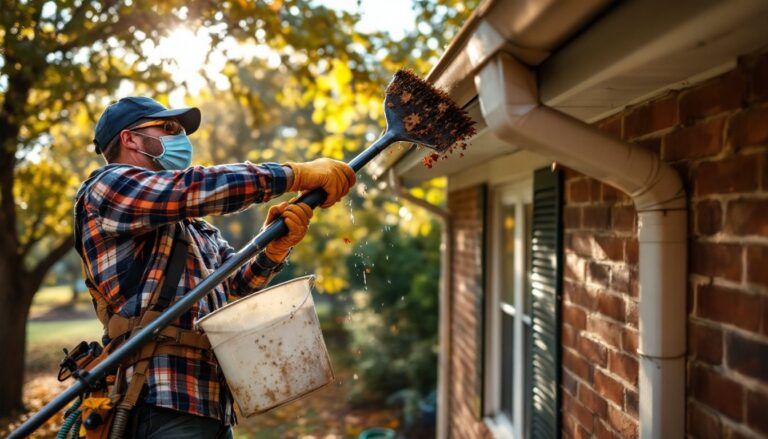
Gather your supplies before climbing. You’ll need a ladder (20-foot extension ladder for two-story homes, with leveling feet), a bucket, work gloves (rubber or nitrile, rated for wet debris), safety glasses, and sturdy footwear with good grip. A gutter scoop (plastic or aluminum, roughly $15–30) or a small garden trowel works for scooping debris. A wet-dry shop vacuum with an extension hose speed up cleanup: the suction pulls out packed leaves without climbing in and out of the gutter. Alternatively, a garden hose with a pistol-grip nozzle flushes remaining sediment. Never wear flip-flops or loose clothing. Have a helper spot you at the base of the ladder, gutter work requires balance and concentration.
Step-by-step process:
-
Set up safely. Place the ladder at an angle (base 1 foot away for every 4 feet of height) and ask your helper to stabilize it. Wear gloves, glasses, and long sleeves.
-
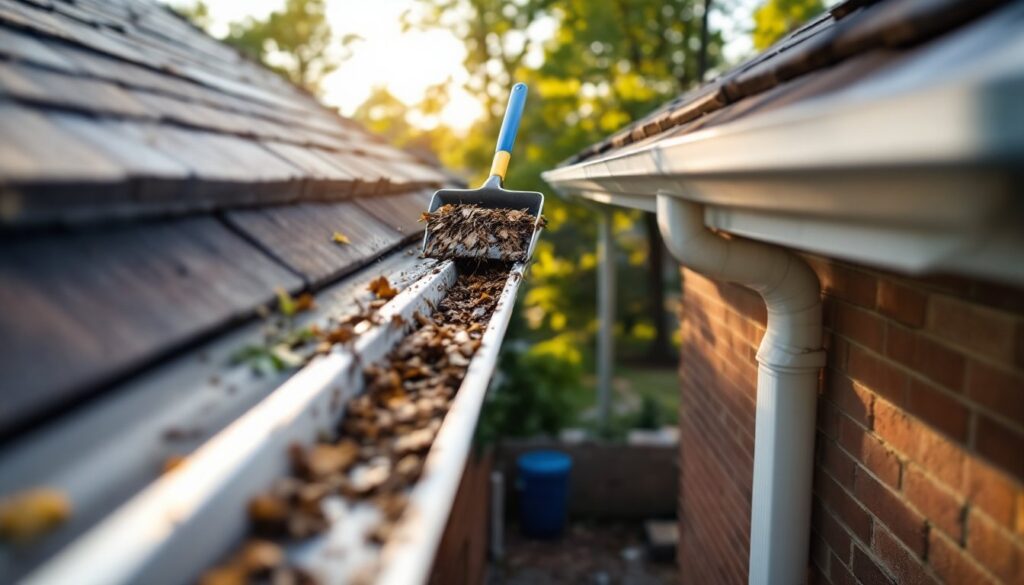
Remove large debris first. Scoop out leaves, twigs, and packed silt by hand into the bucket. Work your way along one gutter section at a time (15–20 feet).
-
Flush with water. Once large debris is out, use a hose to rinse remaining sediment and leaves toward the nearest downspout. Check for clogs in the downspout outlet at ground level.
-
Clear downspout blockages. If water doesn’t flow freely at the outlet, a clog exists. Use a plumbing snake, garden hose pressure, or remove the downspout and clear it from above (a second person helps here).
-
Inspect and test. After cleaning, run water from a hose at one end of a gutter section. Water should flow smoothly toward downspouts with no pooling. If it pools, the gutter may be sagging, note the spot for repair.
-
Lower ladder and move. Once a section is done, reposition your ladder for the next 15–20 feet. Never overreach from a ladder: constant repositioning is safer and faster than you’d think.
On a typical single-story home, DIY gutter cleaning takes 2–3 hours with a helper. Two-story homes take 4–5 hours. If you’re uncomfortable at height, skip the ladder work entirely, the risk isn’t worth a $100 DIY savings.
Common Gutter Problems And How To Spot Them Early
Visibly sagging gutters are the most obvious problem. Hangers fail over time, especially where clogged gutters pulled heavy weight. Stand back and look at your gutter line from 10 feet away, it should be straight. Dips or sags mean water pools in those spots. If only one or two hangers are loose, you can replace them ($30–50 in hardware and an hour of work with a ladder). Multiple sagging sections signal that professional replacement might be cheaper than patching.
Stealing a look at your foundation after a rainstorm reveals water problems. If water pools along the base or you spot erosion channels, your downspouts aren’t discharging far enough. Standard downspouts end 4–6 feet from the house: ideally, they should reach 8–10 feet away or tie into buried drainage. Adding downspout extensions costs under $20 per downspout and fixes most overflow issues.
Granule loss (dark sediment or sand in gutters) indicates roof shingles are deteriorating, not a gutter problem, but worth monitoring. If gutters are full of granules, your roof is aging and may need replacement within 3–5 years. Cracks or holes in gutters are harder to spot, but if you notice water dripping from a spot during rain while the downspout flows normally, a crack exists. Small holes ($200–400 sealing or patching) beat full gutter replacement ($2,000+). Pricing varies widely by gutter material and length: getting local quotes helps set realistic expectations.
When To Call Professional Gutter Cleaning Services In Brampton
A licensed gutter cleaning professional makes sense if your home is three stories tall, you have mobility issues, the gutters are in poor condition, or you’re simply uncomfortable on a ladder. Pros have insurance, specialized equipment (extended ladders, harnesses, safety gear), and speed, they finish in 1–2 hours what takes a homeowner a full day. Brampton gutter cleaning typically runs $150–300 for a single-story home, $250–500 for two stories, depending on gutter length and debris volume. Request a quote from multiple local providers: platforms like Angi list vetted local service providers with homeowner reviews.
If your gutter system needs repair (loose hangers, leaks, sagging sections), professionals diagnose issues you might miss and handle structural fixes. If your downspouts don’t reach far enough from the foundation or aren’t draining properly, a professional can extend or reroute them to prevent foundation damage. Combining cleaning with repairs during one visit saves you multiple trips up a ladder. Repairs start around $50 per hanger, $200+ per section for sealing or patching, and $2,000–5,000 for full gutter replacement. Getting estimates from HomeAdvisor or ImproveNet gives you a realistic range before hiring.
Conclusion
Gutter cleaning in Brampton is one of the easiest home maintenance wins. Done twice yearly, spring and fall, it prevents foundation cracks, basement leaks, and costly repairs. If you’re comfortable on a ladder, grab a scoop and bucket: it’s a straightforward half-day project. If not, a local professional clears your gutters quickly and can spot repairs you’d miss. Either way, don’t skip this task. Your home’s foundation will thank you.