Table of Contents
ToggleGutters might not be glamorous, but they’re quietly protecting your Stone Mountain home from thousands of dollars in water damage. When leaves, pine needles, and debris pile up in your gutters, water backs up and either overflows onto your foundation or seeps behind siding and fascia. Stone Mountain’s humid subtropical climate means you’re dealing with year-round leaf drop and moss growth, two of the worst culprits. This guide walks you through cleaning your gutters safely, spotting problems before they become expensive repairs, and knowing when it’s time to call a pro. Whether you’re a hands-on homeowner or just curious what the job involves, you’ll find practical, honest advice here.
Key Takeaways
- Gutter cleaning in Stone Mountain, GA is critical twice yearly due to heavy leaf drop and moss growth from the humid subtropical climate, preventing costly foundation damage that can range from $5,000 to $25,000.
- Late fall (October–November) and late spring (May) are the optimal times for gutter cleaning in Stone Mountain, with additional mid-summer cleaning recommended if large oak or pine trees overhang your roof.
- Safe DIY gutter cleaning requires proper equipment including a 20–28 foot extension ladder, work gloves, a gutter scoop, and safety gear like glasses and slip-resistant shoes, with the entire process typically taking 2–3 hours for a single-story home.
- Watch for warning signs like sagging gutters, rust, separated seams, and peeling fascia paint during inspection, as these indicate potential structural issues that may signal the need for professional repair or replacement.
- Professional gutter cleaning services in Stone Mountain typically cost $150–$300 and are worth considering if you’re uncomfortable on ladders, have a two-story home, or notice multiple damage areas during inspection.
Why Gutter Cleaning Matters in Stone Mountain’s Climate
Stone Mountain sits in a region with consistent rainfall and tree coverage, which means your gutters face relentless seasonal challenges. Heavy rain in spring and summer, coupled with the constant shed from Georgia’s pine and oak trees, creates a perfect storm for debris accumulation. When gutters clog, water doesn’t flow freely toward downspouts, it pools, stagnates, and begins working its way into places it shouldn’t: behind fascia boards, into attic soffits, or worse, into your foundation.
Moss and algae also thrive in Stone Mountain’s humidity, especially on north-facing gutters where sunlight is limited. This biological growth isn’t just unsightly: it reduces water flow and adds weight to your gutter system. Over time, this stress pulls gutters away from fascia or causes sagging that traps even more water. Foundation damage from clogged gutters can cost $5,000 to $25,000 to repair, far more than the few hours it takes to clean them twice a year. Think of gutter maintenance as cheap insurance against serious water damage.
Best Time to Clean Gutters in Stone Mountain, GA
In Stone Mountain, timing matters. Late fall (October through November) is critical because deciduous trees shed heavily, and you need clear gutters before winter rains arrive. A second cleaning in late spring (May) catches pine debris and new growth that accumulated over winter. Many homeowners miss the spring pass and regret it when June’s storms hit clogged gutters.
If you have a large oak or pine directly over your roof, consider three cleanings per year, late fall, late spring, and mid-summer. Check your gutters after heavy storms too: wind-driven rain can deposit surprising amounts of debris in just a few hours. Avoid cleaning immediately after a heavy rain when gutters are still dripping and surfaces are slick: wait until gutters have dried, which usually takes a few hours on a sunny day. Early morning or late afternoon, when temperatures are cooler, makes the work safer and less exhausting.
Essential Tools and Safety Equipment You’ll Need
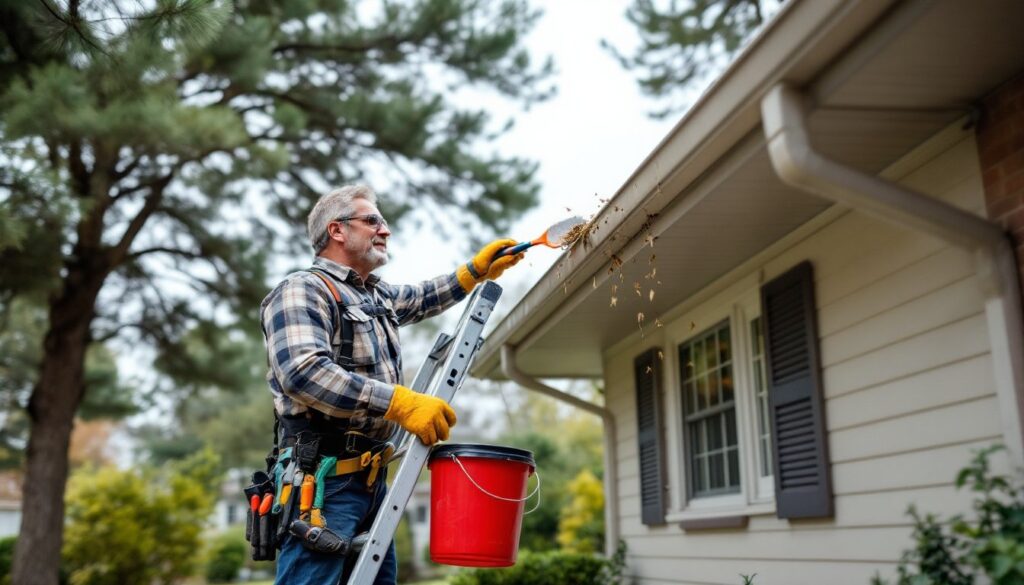
Before you climb a ladder, gather the right gear. You’ll need:
Tools:
- A sturdy 20- to 28-foot extension ladder (Stone Mountain homes often sit on sloped terrain, so measure twice)
- Work gloves, leather or heavy-duty rubber to protect from sharp debris and metal edges
- A gutter scoop (inexpensive plastic or metal tool) or a small garden trowel for scooping debris
- 5-gallon bucket with a rope or carabiner to hang from the ladder
- Hand pruners for cutting stubborn vine growth
- A garden hose with a spray nozzle to flush gutters and downspouts
- Wire brush or gutter brush attachment for removing moss and algae
Safety Equipment:
- Safety glasses or goggles (debris flies when you’re scraping)
- Work gloves (wear them, rusty gutters and sharp metal edges are no joke)
- Dust mask if you’re sensitive to mold or old debris
- A ladder stabilizer bar or roof bracket to keep the ladder from slipping sideways
- Slip-resistant shoes with good tread
If you’re uncomfortable on a ladder, uncomfortable with heights, or over 60, be honest with yourself, this is when calling a professional makes sense. One fall costs far more than a gutter cleaning service.
Step-by-Step DIY Gutter Cleaning Process
1. Set up your ladder safely. Position it on level ground and have someone spot you if possible. The ladder should lean at roughly a 75-degree angle (one foot out for every four feet of height). If your yard slopes, use a ladder leveler to compensate.
2. Start at the downspout end and work backward. Scoop out the bulk of leaves and debris with your gutter scoop, dumping it into the bucket. Move slowly, this isn’t a race, and you’ll spot problems more easily at a steady pace.
3. Remove stubborn growth. Once loose debris is out, use a wire brush or gutter brush attachment to scrub away moss, algae, and fine sediment. Pay special attention to the inside corners where debris compacts. If moss is thick, spray it first with a garden hose and let it soften for a few minutes.
4. Flush with water. Once the gutter is clear, use your garden hose (with a spray nozzle set to a steady stream, not a jet) to flush the gutter toward the downspout. This removes remaining silt and tells you whether the downspout is draining freely.
5. Check downspouts. If water backs up at the downspout, it’s clogged. Use a plumbing snake or flush it from the top with high-pressure water. If the downspout is really stubborn, disconnect it at the base and clear it by hand or with a snake.
6. Inspect as you go. Look for rust, holes, sagging sections, or loose fasteners. Note any problems for later repair. Do not attempt to work on gutters during rain or when they’re wet, you’ll slip, lose your footing, and possibly the bucket.
Expect the process to take 2–3 hours for a typical single-story Stone Mountain home. For larger homes or two-story houses with lots of gutters, add time accordingly.
Common Gutter Problems to Watch For
While you’re cleaning, keep an eye out for damage that hints at bigger issues. Sagging gutters usually indicate debris overload, rust, or failed fasteners, the gutter is pulling away from the fascia. This is cosmetic at first but accelerates water damage if ignored. Rust spots or small holes might be surface corrosion or signs of failing aluminum or steel gutters that are nearing end of life (typically 15–20 years for steel, 20–25 for aluminum).
Look for separated seams where gutter sections join, these leak and are common in Stone Mountain’s temperature swings. Peeling paint or discolored patches on fascia below gutters usually means water’s been spilling over. Homeowners sometimes install gutter guards (mesh or foam inserts) to reduce cleaning frequency, but they don’t eliminate the need for periodic checks. Guards trap finer debris and can clog just as badly if unmaintained.
If you notice several of these issues, sagging, rust, leaks, separated seams, your gutters may be nearing replacement. The cost of new gutters varies widely based on material (aluminum, steel, copper, vinyl) and extent of damage, ranging from $1,000 to $5,000 for a typical Stone Mountain home. This is a good time to consult a professional for a repair vs. replacement recommendation.
When to Call Professional Gutter Cleaners
Not every gutter job is a DIY project. Call a pro if:
- You’re uncomfortable on ladders or have mobility/balance issues. It’s not worth a fall.
- Your home is two stories or taller. Working at height with only one free hand gets risky fast.
- You have significant roof damage or unstable fascia. A professional can safely assess while you’re up there.
- Your gutters are clogged with standing water or algae growth so thick it’s like concrete. You need specialized equipment.
- You notice multiple problem areas during inspection, leaks, rust, sagging sections that suggest structural issues. A pro can diagnose and quote repairs in one visit.
Stone Mountain homeowners can find qualified gutter cleaners through top gutter cleaning professionals in Stone Mountain, GA, which lists local services with customer reviews. For cost estimates and contractor matching, platforms like HomeAdvisor help you compare pricing and read feedback. If you’re planning larger gutter or roof work alongside cleaning, ImproveNet provides cost guides and project planning tools. Professional cleaning typically costs $150–$300 depending on home size and gutter condition, a reasonable price for peace of mind and your safety.
Conclusion
Clean gutters are one of those unglamorous but essential home maintenance tasks that pay dividends. In Stone Mountain’s humid climate with heavy tree coverage, staying on top of gutter cleaning twice a year prevents water damage, foundation problems, and expensive repairs. Whether you tackle it yourself or hire a professional, the key is consistency and honest assessment of difficulty. Your home, and your wallet, will thank you.