Table of Contents
ToggleGutters might not be glamorous, but they’re doing heavy lifting on your Longview home, especially with the Pacific Northwest’s generous rainfall. A clogged gutter can cost you thousands in foundation, siding, and roof damage in just one rainy season. Whether you’re tackling gutter cleaning yourself or hiring help, understanding what needs to happen, and when, keeps your house protected year-round. This guide walks through the why, the when, the how, and the professional options so you can make the right call for your situation.
Key Takeaways
- Gutter cleaning in Longview, WA is essential protection against costly foundation, siding, and roof damage caused by the region’s 40+ inches of annual rainfall.
- Schedule gutter cleaning twice yearly—late October through November (before heavy rains) and late May through June (after winter debris accumulates)—with additional cleanings for heavily treed properties.
- DIY gutter cleaning requires proper safety equipment, a 24–28 foot ladder, and typically takes 2–4 hours for single-story homes when following step-by-step scooping, flushing, and inspection procedures.
- Professional gutter cleaning services in Longview cost $150–$500 depending on home height and gutter length, and reputable companies offer insurance, damage inspections, and 30-day guarantees.
- Prevent future clogs by trimming overhanging branches 6–8 feet back, installing selective gutter guards, ensuring proper 1/8-inch slope toward downspouts, and using heat tape to prevent winter ice dams.
- Clogged gutters can weigh 50+ pounds per linear foot when wet, pulling gutters away from your home and causing structural sagging that costs thousands to repair.
Why Regular Gutter Cleaning Matters in Longview
Longview sits in a wet climate. The region averages over 40 inches of rain annually, often concentrated in fall and winter. That water has to go somewhere, and your gutters are the first line of defense against moisture damage.
When leaves, pine needles, and debris clog gutters, water backs up and spills over the edge. From there, it soaks the fascia (the board the gutter hangs from), rots the soffit, seeps behind siding, and pools against your foundation. A single season of neglect can create structural problems that cost $5,000 to $15,000 to repair, way more than the cost of regular cleaning.
Clogged gutters also become heavier. Wet leaves and standing water can weigh 50+ pounds per linear foot. That weight pulls gutters away from the house, breaking fasteners and causing sagging. Ice dams in winter make the problem worse: trapped water freezes, expands, and forces gaps where water infiltrates.
Regular gutter cleaning is cheap insurance. You’re protecting your roof, walls, foundation, and landscaping all at once.
When to Schedule Gutter Cleaning in Longview
The Pacific Northwest’s deciduous trees, oaks, maples, and alders, shed heavily in fall. That’s your primary cleaning window: late October through November. Aim to finish before the heavy rains hit in December.
Don’t stop there. Late spring (May–June) is a second window. Winter debris, moss growth, and spring pollen accumulate over months. A spring cleaning prevents summer clogs and catches any storm damage from winter.
If you have a lot of overhanging trees or live near a wooded area, you might need three or even four cleanings per year. Conversely, if your home has minimal tree coverage and sits on an open lot, twice yearly might be overkill, but don’t stretch it longer than six months between cleanings.
During heavy storms or after wind events, check your gutters visually from the ground. If you see water cascading over the edge instead of flowing through downspouts, something’s clogged. Don’t wait until the next scheduled cleaning.
DIY Gutter Cleaning: Step-by-Step Instructions
Essential Tools and Safety Tips
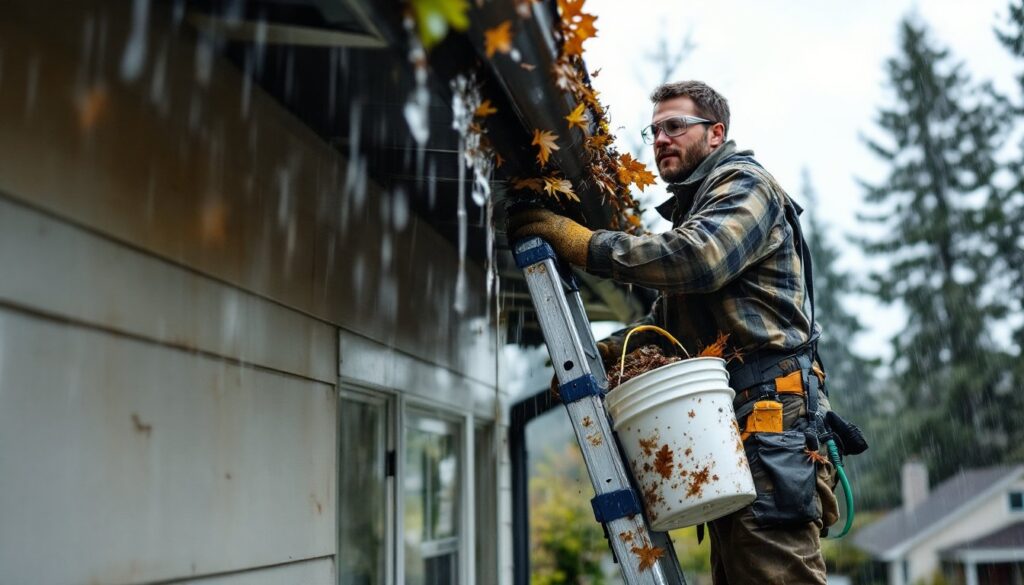
Start with safety. Working on a ladder 20+ feet up carries real risk. Wear non-slip shoes, work gloves (leather or nitrile), and safety glasses to protect against flying debris. Consider a harness or stabilizer bar if your ladder will be above 8 feet, especially if you’re working alone. Have a second person spot you and hand up tools.
Tools you’ll need:
- Extension ladder (24–28 feet for most single-story homes)
- Work gloves (thick leather holds better than thin nitrile)
- Gutter scoop or small shovel (plastic is safer than metal near downspouts)
- 5-gallon bucket with handle
- Garden hose with spray nozzle
- Wire brush (optional, for stubborn moss)
- Trowel or putty knife (clears corners)
Step 1: Set Up Safely
Place your ladder so it rests firmly on level ground. Use a stabilizer bar or have a helper hold the base. Never lean the ladder more than 75 degrees, and never stand on the top three rungs. Wear work gloves and glasses before you climb.
Step 2: Scoop Out Large Debris
Start at a downspout. Work away from it, scooping out wet leaves, twigs, and packed dirt into your bucket. Use a plastic gutter scoop, it’s shaped to fit the gutter profile without damaging edges. Go slow and let the bucket fill: jumping down repeatedly wastes time and increases ladder risk.
Step 3: Flush With Water
Once the big stuff is out, pull out your garden hose. Use the spray nozzle set to medium pressure. Work from the downspout end, flushing debris toward it. Watch how water flows: if it pools in one spot, there’s a low spot in the gutter or a hidden clog inside the downspout. High-pressure spray can dent gutters and strip protective coatings, so avoid that.
Step 4: Check Downspouts
Water should disappear down the downspout without backup. If it doesn’t, the downspout is clogged. Use a plumbing snake or stick to dislodge leaves. If that doesn’t work, disconnect the downspout (usually 2–3 screws) and flush it out with a hose. Stubborn clogs might need a pressure washer set to low (under 40 PSI).
Step 5: Inspect for Damage
With gutters empty and wet, look for standing water, sagging sections, rust holes, or separated seams. Minor rust can be scrubbed with a wire brush and treated with gutter sealant. Sagging gutters need fastener repair: loose screws should be tightened. Holes or severe rust mean that section needs replacement.
The whole job usually takes 2–4 hours for an average-sized single-story home. Multi-story homes or heavily treed lots take longer.
Professional Gutter Cleaning Services in Longview
DIY cleaning works well if you’re comfortable on a ladder and your gutters are under 20 feet. But if your home is two stories, gutters are hard to access, or you’d rather not risk it, professional service makes sense.
Longview has several gutter cleaning specialists. They typically charge $150–$300 for a single-story home, $250–$500 for two-story, depending on gutter length and debris load. Some companies add pressure washing, gutter guards, or minor repairs as add-ons.
When choosing a pro, verify they’re licensed (in Washington, most gutter work doesn’t require licensing, but some companies carry general contractor licenses for credibility). Check reviews on verified gutter cleaning pros in Longview, WA to compare ratings and get a sense of response time and workmanship. Ask if they’re insured and bonded, if a worker falls or damages your roof, you want coverage.
Get a quote that specifies what’s included: cleaning, downspout flushing, inspection for damage, and disposal of debris. Some pros offer “gutter guards”, screens or foam inserts that reduce debris entry, but these aren’t foolproof and can trap smaller debris that still clogs gutters.
Reputable companies guarantee their work and will re-clean within 30 days if gutters aren’t free-flowing. That’s worth paying for.
Preventing Future Gutter Problems
Cleaning is reactive. Prevention is smarter. A few strategies reduce the work:
Trim Trees Overhanging the Roof
The closer branches are to gutters, the more leaves and needles accumulate. Trimming back overhanging limbs 6–8 feet away reduces debris by 50% or more. Professional tree trimming runs $300–$1,500 depending on the number of trees and size, but it’s an investment that pays back quickly in lower cleaning frequency.
Install Gutter Guards (Selectively)
Gutter guards are polarizing. Solid covers (like Leaf Filter or Gutter Helmet) prevent large debris but can trap finer stuff and are pricey ($1,500–$4,000 installed). Screens and mesh-style guards are cheaper ($5–$20 per foot installed) but still require occasional cleaning because pine needles slip through. Before committing, ask yourself: would you save money on cleaning frequency, or just shift the work from ground level to the guard?
Consider testing guards on half your roof before committing to the whole house.
Ensure Proper Gutter Slope
Gutters should slope toward downspouts at about 1/8 inch per 10 feet of run. A gutter that’s level or slopes the wrong way holds water. If you notice standing water after flushing, the gutter may have settled. This is worth checking during your spring cleaning: a professional can re-hang and adjust if needed.
Add or Relocate Downspouts
Some gutters have a single downspout at one end, meaning water has to travel 40+ feet before it drains. Adding a second downspout in the middle cuts travel distance and reduces overflow risk. This is a straightforward DIY job (two 90-degree elbows and a vertical section) or a contractor can do it in an hour.
Keep Gutters Clear in Winter
Ice dams form when gutters trap water. Keeping gutters clean throughout fall and early winter prevents the standing water that freezes. If an ice dam does form, avoid the temptation to break it with an axe (you’ll damage the gutter). Instead, use a heat tape (like Heatra Cable or CableGuard) along the gutter edge, which melts ice and creates channels for water to drain.
Conclusion
Gutter cleaning isn’t exciting, but it’s one of the highest-ROI maintenance tasks you can do. Longview’s rainfall demands a defense plan. Whether you’re climbing a ladder twice a year or calling a pro, the key is consistency. A clogged gutter today becomes a rotted fascia and foundation damage in two years. Stay ahead of it, and your home will thank you.