Table of Contents
ToggleGutters are one of those invisible workhorses of home maintenance that nobody thinks about until water starts pouring over the edge during a heavy rain. In Concord, NC, where spring and fall bring both leaves and pollen, clean gutters are essential to protecting your foundation, siding, and landscaping from water damage. Whether you’re a seasoned DIYer or picking up a ladder for the first time, gutter cleaning in Concord is a manageable weekend project that’ll save you hundreds in water-related repairs down the road. This guide walks you through everything you need to know, from timing and tools to the actual cleaning process and when it’s time to bring in a pro.
Key Takeaways
- Gutter cleaning in Concord, NC should be performed twice yearly (late fall and early spring) to prevent water damage, foundation issues, and costly repairs.
- Clean your gutters safely using proper equipment: an extension ladder, gutter scoop, bucket, hose, and work gloves; always have a spotter and prioritize safety gear like glasses and a dust mask.
- The DIY gutter cleaning process takes 2–3 hours for a single-story home and involves scooping debris, clearing downspouts, flushing with water, and inspecting for damage like rust or sagging sections.
- Watch for common gutter problems including sagging sections, separated seams, disconnected downspouts, and rust perforation—minor issues can be DIY fixes, but structural damage warrants professional help.
- Professional gutter cleaning services in Concord cost $150–$300 for single-story homes and are recommended for multi-story houses, complex issues, or if you’re uncomfortable working at heights.
Why Regular Gutter Maintenance Matters in North Carolina
Concord’s climate, humid summers, wet winters, and two serious leaf-drop seasons, creates ideal conditions for gutter clogging. When gutters fill with leaves, twigs, and debris, water can’t drain properly, and that’s when trouble starts. Standing water becomes a breeding ground for mosquitoes and mold. Overflow spills onto fascia boards (the trim behind your gutters), rotting them from the outside in. Worse, water pooling along your foundation can seep into basements or crawl spaces, leading to structural issues that cost thousands to fix.
Your gutters are also part of your home’s drainage system that directs water away from the foundation. Clogged gutters defeat that purpose. Regular cleaning, typically twice a year, plus spot checks after storms, keeps water flowing away from your home where it belongs. It’s preventative maintenance that’s far cheaper than replacing foundation damage or fixing water damage inside your home.
When Should You Clean Your Gutters?
In Concord, aim to clean gutters in late fall after the leaves have finished dropping (usually November) and again in early spring (March or April) when winter debris and pollen accumulate. If you have heavy tree cover or live near mature oaks, you might need a third cleaning in summer.
Don’t wait for visible overflow or a downpour to trigger a cleaning. Check your gutters during dry weather by looking from the ground with binoculars, if you see dark, wet streaks or crusty buildup, it’s time. After heavy storms with wind, do a quick visual inspection. Some homeowners set phone reminders twice yearly to avoid forgetting. The best time of day is mid-morning on a dry day when the sun’s had a chance to dry any morning moisture on the roof and gutters.
Essential Tools and Safety Equipment You’ll Need
Safety gear is non-negotiable. Wear safety glasses to protect against debris flying up, work gloves (leather is best for grip), and a dust mask or N95 respirator since old gutter debris can harbor mold spores. Hearing protection isn’t critical for gutter cleaning, but if you’re using a blower or pressure washer, it’s wise.
Tools to gather:
- Extension ladder (20-24 feet for most single-story homes: ensure it’s in good condition and on level ground)
- Gutter scoop or small garden shovel (removes bulk debris efficiently)
- Bucket (5-gallon works well for collecting loosened gunk)
- Hose with spray nozzle (flush gutters and downspouts)
- Gutter brush or stiff-bristled brush (scrubs stubborn buildup)
- Cordless blower (optional but faster for dry debris)
- Sturdy work gloves (leather or reinforced nitrile)
- Ladder stabilizer or standoff (keeps ladder away from gutters, reducing strain)
If your house is two stories, consider whether you’re comfortable reaching from a ladder at that height. If not, it’s okay to call in help.
Step-by-Step DIY Gutter Cleaning Instructions
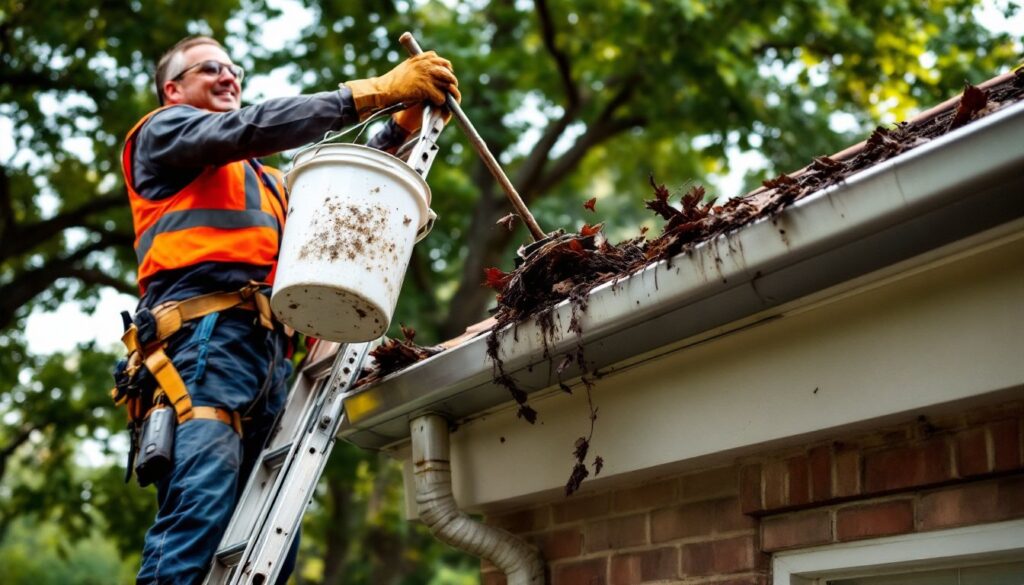
1. Set up safely. Position your ladder on level, solid ground (not on a slope or on mulch). Use a ladder stabilizer if your gutters are older and fragile. Always have someone spot you, or use a ladder with a bucket hook so you’re not juggling a bucket one-handed.
2. Scoop and remove large debris. Starting at the downspout (or farthest point from drainage), use your gutter scoop to pull out leaves, twigs, and packed silt. Work toward the downspout opening, dropping debris into your bucket. This is the bulk of the work and takes the most time.
3. Check and clear downspouts. Once gutters are mostly clear, test the downspout by running water through it. If water backs up, you’ve got a clog. Use a plumbing snake or feed a hose up from the bottom with a rubber nozzle to dislodge blockages. Some clogs are ice-dam buildup (winter) or matted leaves, be patient and work from both ends if needed.
4. Flush with water. Grab your hose and flush the entire gutter from one end to the other, watching for proper drainage at each downspout. Use your brush to scrub away algae stains or mineral deposits while you flush. Water should flow smoothly without pooling anywhere.
5. Inspect for damage. While you’re up there, look for rust spots, separated seams, or sagging sections. Rust on steel gutters or green patina on copper gutters is cosmetic, but rust with holes needs patching. Sagging gutters lose drainage slope and need adjustment or replacement, that’s a sign to call a pro.
The entire job typically takes 2–3 hours for a single-story home, depending on debris volume. Take breaks: climbing up and down drains you faster than you’d think.
Common Gutter Problems to Watch For
Sagging sections are the most common issue. Gutters should slope slightly (about 1/4 inch per 10 feet) toward downspouts. If you see a dip or pooling water, the hangers (brackets securing the gutter to fascia) may be loose or corroded. Tightening the bolts can help, but if hangers are rusted out, they need replacement, that’s beyond basic DIY.
Separated seams occur where gutter sections join. A small gap lets water leak behind the gutter onto your fascia and soffit. Silicone caulk can seal minor gaps, but if the seams are opening wide, the gutter is shifting and needs re-securing or replacement.
Downspout disconnects are surprisingly common. Many homeowners disconnect downspouts in winter to prevent ice dams, then forget to reconnect them. Make sure your downspout extends at least 4–6 feet away from the foundation or connects to drainage (French drain or dry well). Water dumped against the foundation accelerates settling and cracking.
Rust or perforation in steel gutters appears as small holes or orange staining. One or two holes can be patched with gutter patch kits or roofing cement. If rust is widespread, the gutter’s lifespan is limited, and replacement is smarter than perpetual repairs.
If you spot any of these issues beyond your comfort zone, that’s when homeowners in Concord often find help from local contractors who specialize in gutter work.
When to Call a Professional in Concord
Not every gutter situation requires a pro, but some do. Call a professional if:
- Your home is more than two stories tall (safety trumps DIY)
- You’re uncomfortable on a ladder or have balance or mobility issues
- You suspect structural damage (sagging that affects roof alignment, rust-through sections, or separated hangers)
- Downspouts are clogged deep inside the wall (requires guttering access or professional snaking)
- You need gutter guards installed (keeps out most debris and reduces cleaning frequency)
- Your gutters are copper, specialty material, or high-end and require careful handling
You can find vetted local contractors through resources like gutter cleaning professionals in Concord, which lists local reviews and ratings. Cost typically runs $150–$300 for a single-story cleaning, depending on debris volume and home size. Get quotes from at least two contractors before deciding. Many offer seasonal specials or bundled services (roof inspection + gutter cleaning). Also, HomeAdvisor offers cost estimators to help you budget and find vetted pros in your area.
Conclusion
Gutter cleaning isn’t glamorous, but it’s one of the highest-ROI maintenance tasks you can do as a homeowner. Twice-yearly cleaning, plus regular visual checks, prevents water damage that costs thousands to repair. If you’re comfortable on a ladder and willing to spend a Saturday morning, DIY is straightforward and rewarding. If not, the cost of hiring a professional is insurance against foundation damage, fascia rot, and basement flooding. Either way, don’t skip this essential maintenance. Your gutters are quietly protecting your home every time it rains. Keep them clean, and they’ll keep your home dry.